Antebellum southerners recognized the need to industrialize. In many ways, the perception of the Old South as an agrarian society are a little misleading. Certainly, the planter class dominated the political culture of the antebellum era and tended to hold industry in low esteem. Moreover, most southerners, both free and slave, engaged in agricultural production. Yet by global standards, the Old South was not terribly far behind Europe, with the exception of England, in terms of industrial development. It was the American North that was exceptional - indeed, radically different in its pursuit of industry.
The Civil War forced the South to engage in manufacturing on a scale that it had never before seen. Although many of these industries suffered devastation at the hands of Union soldiers during the war, their presence presaged the changes of the postbellum era.
The southern environment has always played a key role in the development of industry in the South. Nowhere is this connection more obvious than the physical location o
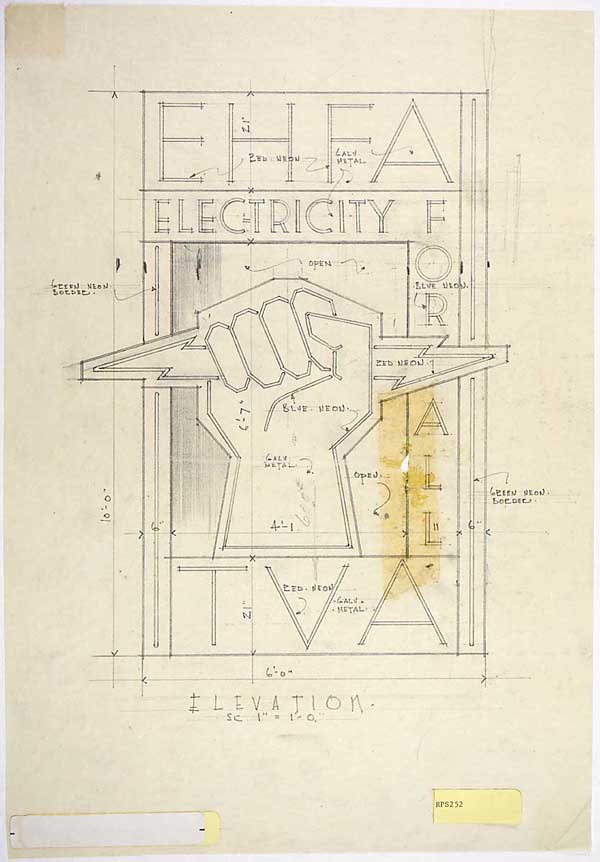 f industrial activity. Rivers, and specifically the Fall Line, were responsible for determining the site of all major southern cities from Virginia through the Carolinas, Georgia, and Alabama. While waterways offered nineteenth-century southern communities vital transportation networks and a source of mechanical power, in the twentieth century they supplied essential ingredients for major manufacturing. Through the use of hydroelectric dams, Duke Power supplied the North Carolina Piedmont with the most sophisticated power grid anywhere in America. By the 1930s, the Tennessee Valley Authority had engaged in a massive government-works project that not only tamed the damaging floods of the Tennessee River, it supplied the electricity essential to major manufacturing operations such as a munitions plant built at Muscle Shoals, Alabama, a factory that went on to produce 3/4 of all the fertilizer manufactured in America. Water and a robust power grid (along with generous tax breaks) remain an essential ingredient in attracting "sunbelt" manufacturing - plants like Mercedes Benz's Tuscaloosa facility - to the South.
Industrialization in the decades that followed the Civil War also converged with changing settlement and labor patterns in the region. Southerners of both races moved from countryside to town in order to work in new industrial jobs, and this ultimately led to conflict.
Many of the industries that flourished in the postbellum South were either extractive (harvesting the mineral or natural wealth of the land) or derivative of the natural environment (cotton mills, for instance.) Below are a few of the major types of southern industry to develop in the late nineteenth and early twentieth century. Consider the intimate links between environment, industry, and the culture that they produced.
Mining
The South is a mineral-rich region. A few industries to consider are the coal fields of southern Appalachia, particularly those found in Kentucky and West Virginia. These deposits have played a crucial role in the industrial development of the nation throughout its history, and remain vital in the context of the debate over energy versus environment. Coal mining, of course, also has left a deep imprint
 upon the cultural identity of Appalachia, the South, and the nation as a whole.
But coal mining is hardly the only mineral found in the South. Less visible in popular culture is the large kaolin mining industry in Georgia and salt in Louisiana, the nation's leading producer of salt. The region is also home to substantial deposits of iron ore, which became manifest in the building of Birmingham and its legendary Sloss Furnace. (Pictured to the right is the Vulcan statue in Birmingham, "the world's largest cast-iron statue.")
The petrochemical industry that lines the banks of the Mississippi River from New Orleans to Baton Rouge is perhaps the most lucrative mineral operation in the modern South. It comes, at a cost, however. Known as "Toxic Alley" or "Cancer Alley," the petrochemical industry leaves a large environmental footprint.
Forestry, Turpentine, and Pulp
There is perhaps no more obvious link between the environment and industry than the South's enormous forestry industry. This history of South Carolina forest products provides a good overview of the trend from naval stores (tar) in the colonial period to modern pulpwood operations in our own era. Few areas of the South do not participate in the lumber industry in some fashion.
Mills and Manufacturing
Cotton and jute mills were part of the southern landscape before the Civil War, but it was not until New South boosters encouraged northern investment in southern spools did the industry become what we know today. Cheap non-union lab
 or, low taxes, abundant resources, and industry-friendly governments meant that proximity to cotton fiber was only icing on the cake for investors. Along with tobacco villages, mining camps, and Birmingham steel-town neighborhoods, few communities are more iconic of the change of southern living from farm to town than the mill town.
Although many textile mills in the region have closed, pulp mills, like this Georgia Pacific cardboard plant near Cedar Springs, Georgia remain an essential part of a community's economic basis.
The South today is home to a wide range of manufacturing plants, both light and heavy, that came to the region in the last fifty years. Some of these facilities, like Oxford's Whirlpool plant, have faced hard times in a global economy and closed.

No comments:
Post a Comment